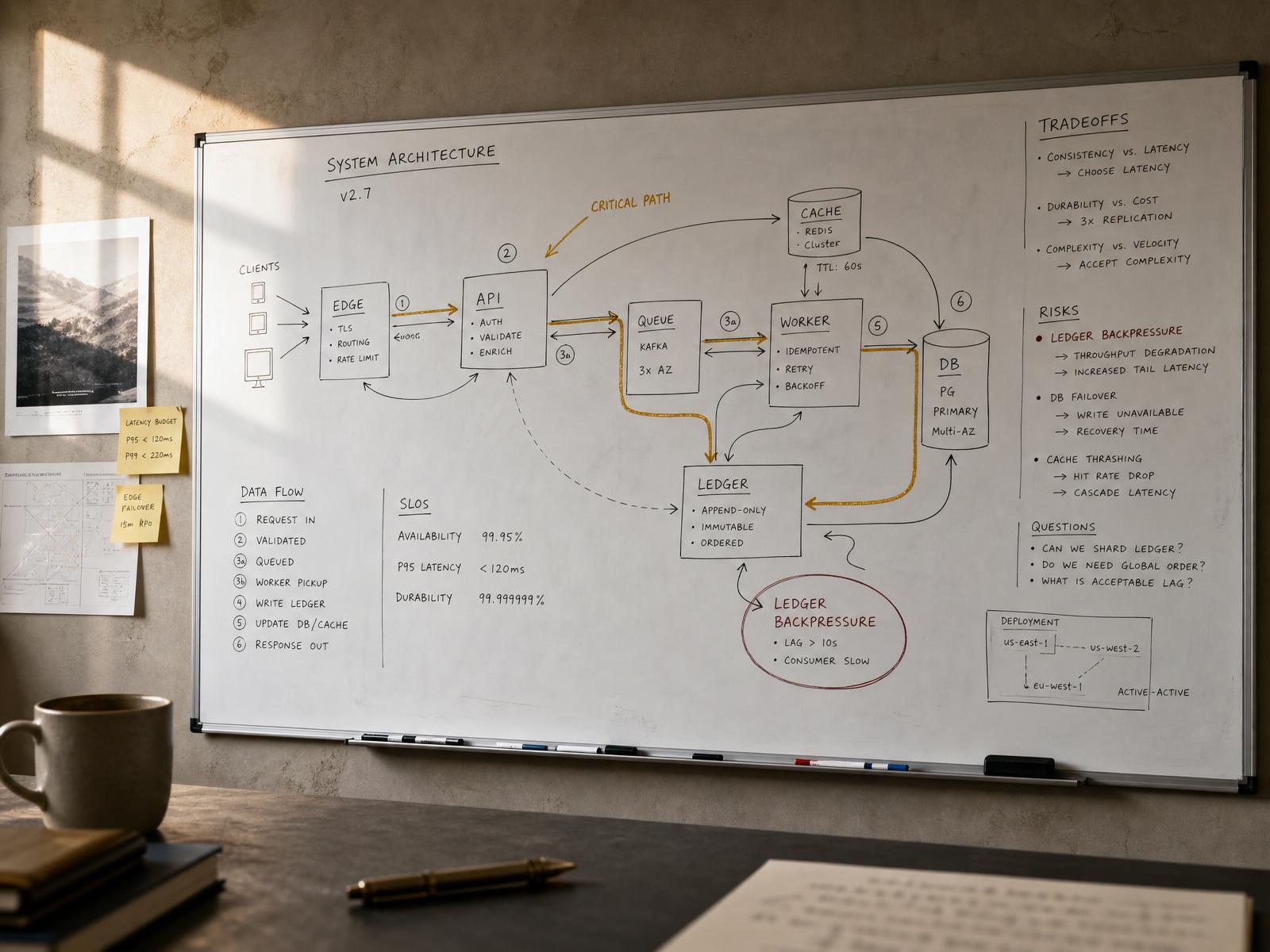
Principle 01 · Featured
Solve the system before the code
Most bugs are architectural bugs in disguise. The cheapest fix is a decision made two layers up, before the first file is opened.
03·How I think · Chapter 03
Fig. 01 · The Operating System
Product intent, users, constraints, and the systems already in the ground, all of it passes through the same axis before it becomes architecture, interfaces, accessibility, and performance.
Engineering judgment isn't a step in the process. It's the thing the process turns on.
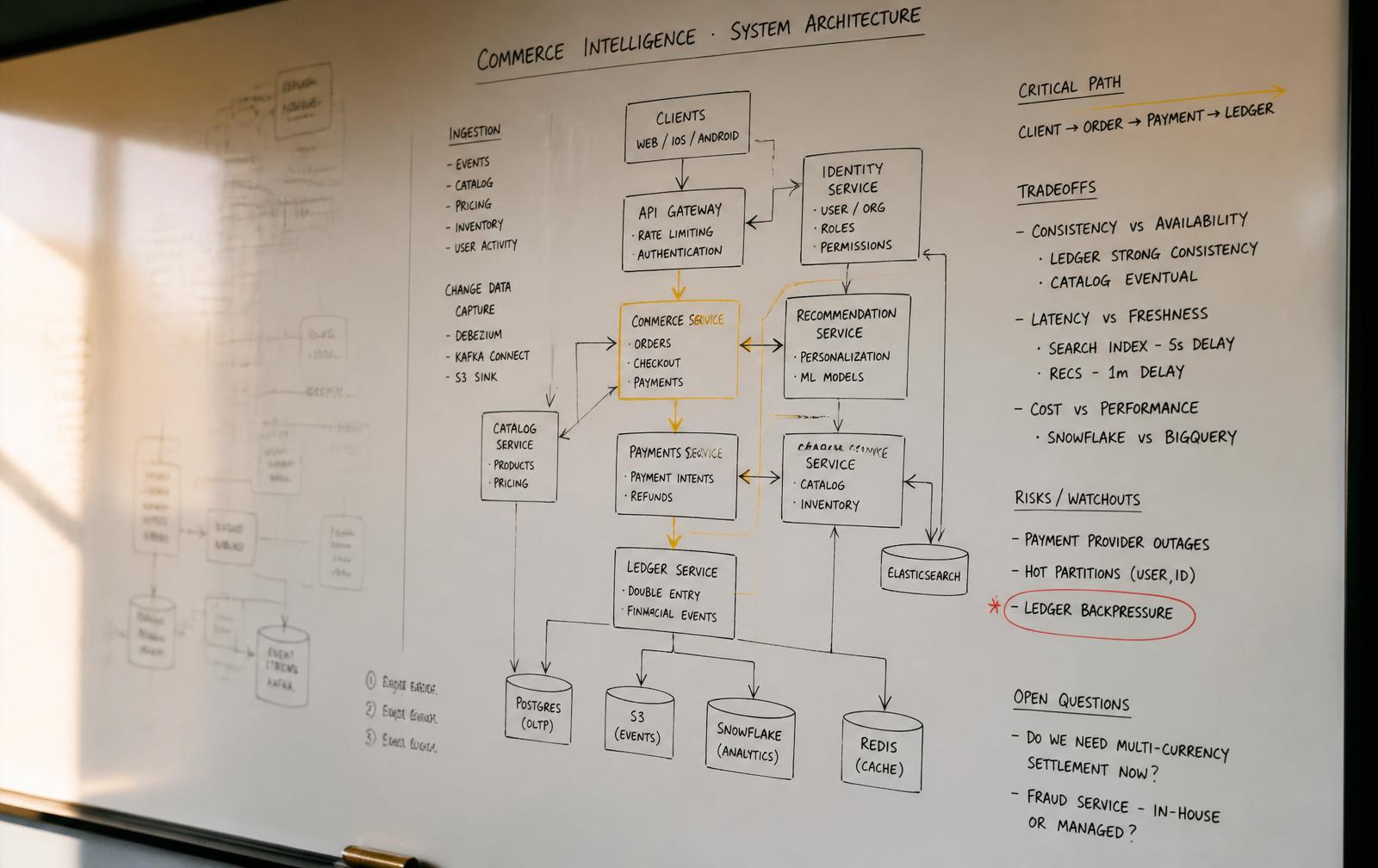
Engineering judgment is the hinge, where raw inputs (constraints, research, prior art, taste) are weighed and shaped into the artifacts a team can actually ship.
Chapter · Principles
Not a manifesto. Working principles, earned, re-tested, and still useful after twenty-five years of shipping.
Principle 01 · Featured
Most bugs are architectural bugs in disguise. The cheapest fix is a decision made two layers up, before the first file is opened.
Fewer props, sharper primitives. A component with slots outlives a component with thirty flags, and every layer above it stays honest.
The interface, the API, the failure modes, the analytics, all of them inherit from the shape of the data. Get that wrong and no framework saves you.
Every meaningful decision has a thing that could quietly go wrong. Marking it in the margin, in oxblood, not in a Slack thread, is what separates a plan from a wish.
WCAG 2.1 AA and Section 508 are the floor. Keyboard flow, focus visibility, and reduced motion are how a product respects the humans it was built for.
Developer experience isn't a nice-to-have. Fast local loops, sharp types, and high-signal docs are what make quality inevitable at the tenth engineer, not the first.
AI widens the surface I can hold at once. Architecture, tradeoffs, the last read before ship, those stay human. Leverage, not authorship.
Chapter · Accessibility
WCAG 2.1 AA and Section 508 are the floor of what a product owes the humans using it, not a checklist to survive an audit.
The ceiling is quality: keyboard-first flows, visible focus states, semantic HTML, reduced-motion parity, screen-reader announcements that match the visual truth, and contrast that holds up in real lighting.
Every accessibility investment pays back somewhere else, tighter component APIs, better test coverage, faster onboarding. Quality compounds because the constraints force clarity.
Field note
“The accessibility investment pays back somewhere else. Every time.”
Keyboard-first
Every path reachable without a mouse.
Semantic HTML
Landmarks, headings, roles by default.
Focus management
Visible, predictable, trapped when it should be.
Screen-reader parity
Announcements match the visual truth.
Reduced motion
Motion is a feature, not a mandate.
Colour contrast
AA minimum, AAA where it counts.
Chapter · AI-Assisted Engineering
Claude for architecture. Copilot for in-editor completion. ChatGPT for exploration. MCP for real repo context. Figma AI to shorten the design-to-code loop. Each tool has a role, the engineer stays at the centre.
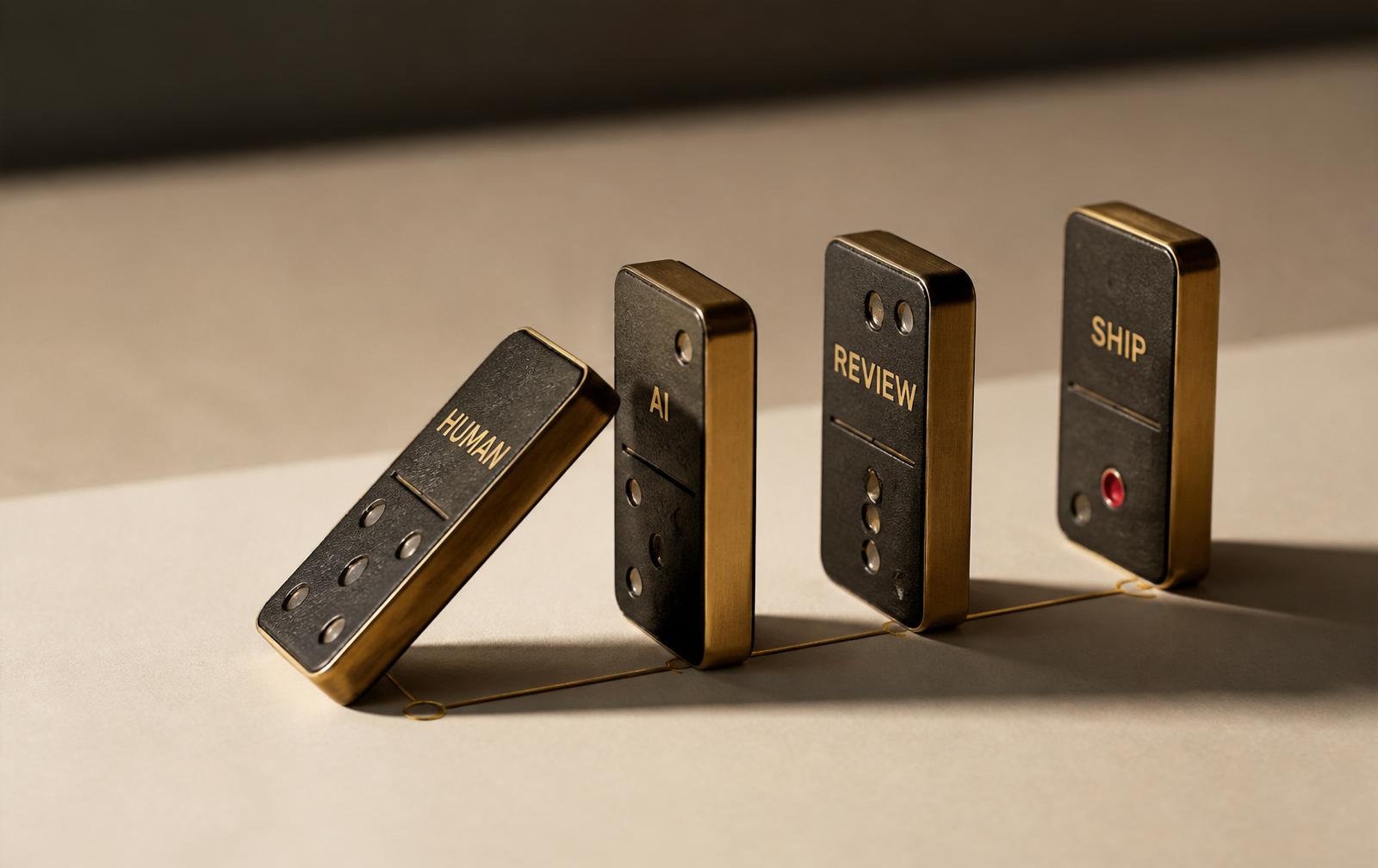
AI is a co-author, never the signature. Each phase leaves an artifact a human can inspect, revise, and stand behind.
Where AI helps
Where judgment stays
Chapter · Mental Models
Three of the pictures I draw before I write anything down. The code exists to make one of these true, nothing more.
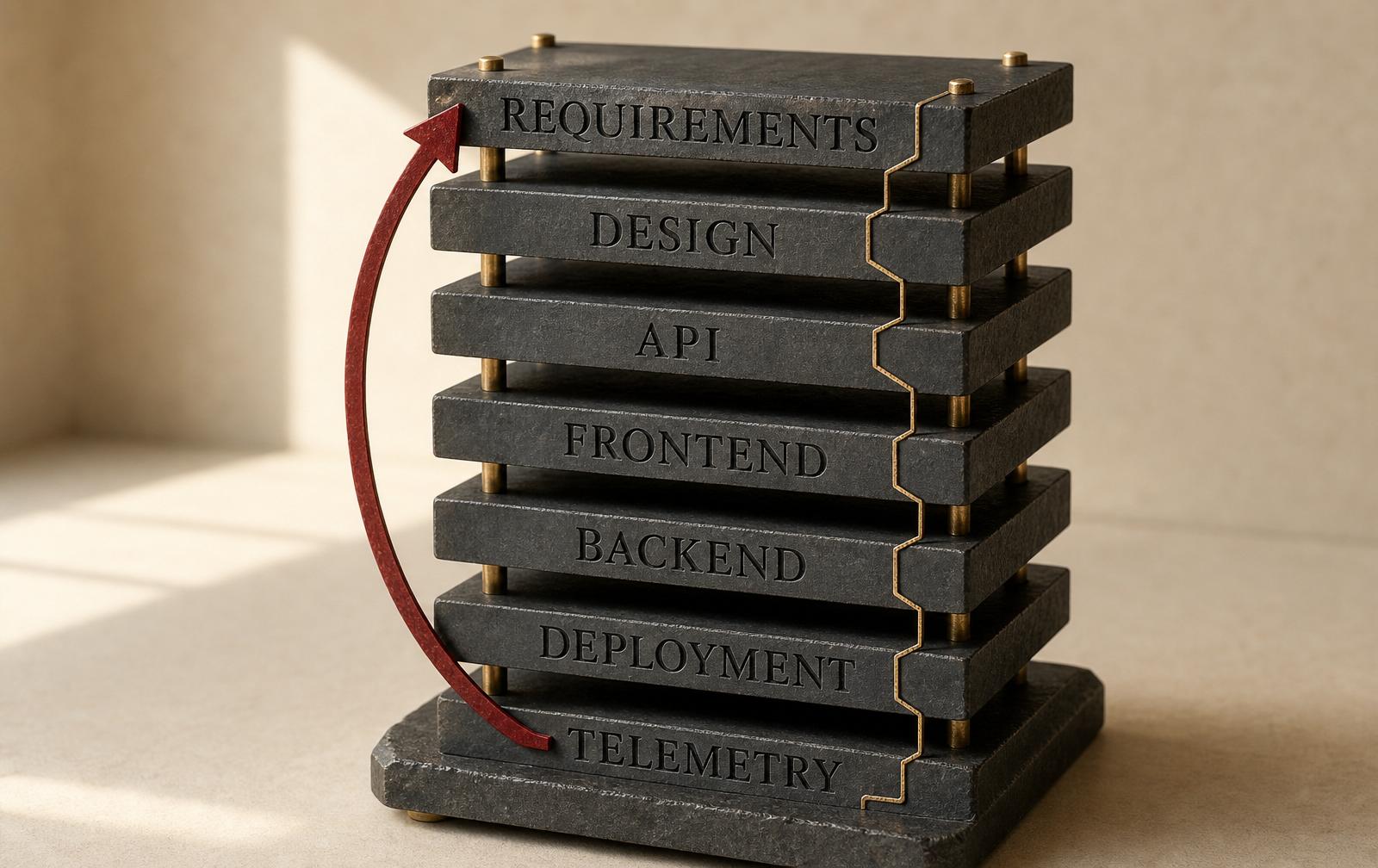
A system rarely fits one metaphor. The useful move is holding three at once and choosing the one that answers the question in front of you.
End of Chapter Three